Make your inbox happier!

Subscribe to Our Newsletter

Technocrats

Technocrats

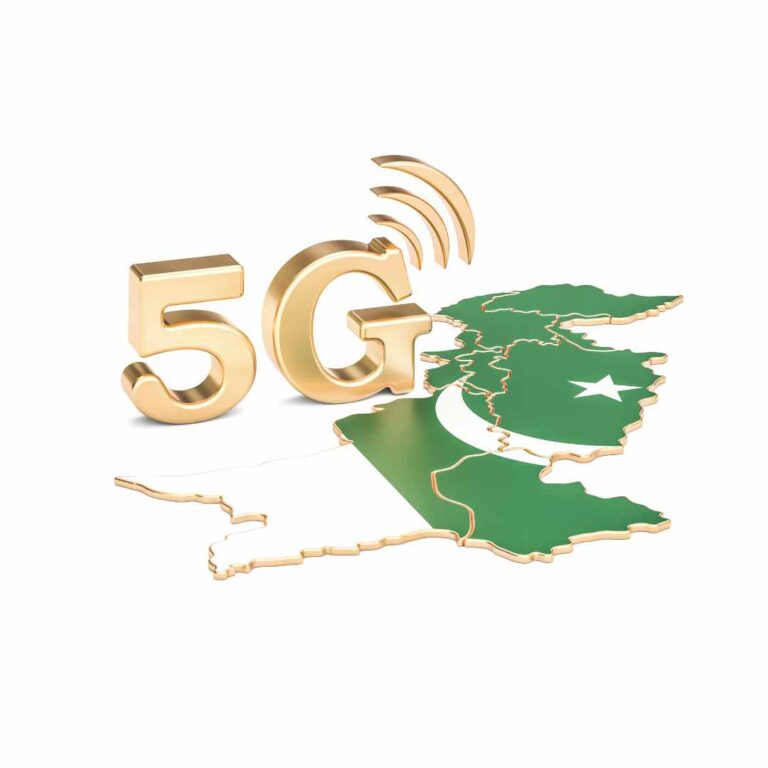
The Swarm Effect: How 5G’s mMTC is Unlocking Pakistan’s Industrial IoT Future

The next frontier of digital transformation isn’t about connecting people; it’s about connecting things. The arrival of 5G is not just promising faster video streaming for consumers; it is fundamentally redesigning the industrial landscape through its capability for Massive Machine-Type Communications (mMTC).


This is the crucial 5G component that promises to support a concentration of up to one million connected devices per square kilometre, shattering the scalability barriers that have previously bottlenecked the Internet of Things (IoT) in industrial and agricultural settings.

For a nation like Pakistan, where sectors such as agriculture and manufacturing are ripe for efficiency gains, mMTC is less an upgrade and more a catalytic infrastructure shift.

Decoding mMTC: Scalability Without Saturation

Historically, existing cellular networks (like 4G) were designed for human-type communications—a high-bandwidth, high-data volume model. When this architecture was stretched to accommodate millions of low-power, low-data IoT sensors, it led to network congestion and inefficiency.

mMTC, a core component of the 5G standard, solves this by prioritizing density and efficiency over sheer speed. It’s built for devices that communicate intermittently, sending small bursts of data (e.g., a temperature reading, a location ping, or a soil moisture level).

  • Unprecedented Density: The ability to handle a million devices per square kilometre means large enterprises, smart cities, and vast agricultural lands can deploy sensors without fear of network saturation.
  • Low Power Consumption: mMTC protocols like Narrowband IoT (NB-IoT) are designed to maximize battery life, allowing sensors to operate for years without maintenance—a critical factor for remote deployments.
  • Low Cost: The focus on minimal data transmission simplifies the hardware, driving down the cost of individual sensor units and making large-scale deployment economically viable.

Transforming Key Sectors: Real-World mMTC Applications
The true impact of mMTC will be felt across Pakistan’s foundational economic sectors, driving efficiency and optimizing resource use—a necessity for a growing and climate-vulnerable economy.

1. Smart Agriculture (Agri-Tech) 
Pakistan’s agricultural sector, which remains the largest employer, stands to gain the most. mMTC enables Precision Agriculture on a scale previously unimaginable:

  • Soil Monitoring: Thousands of low-cost sensors can be deployed across a single farm to monitor soil moisture, temperature, and nutrient (NPK) levels in real-time. This massive data collection allows farmers to use water and fertilizer variably and precisely, leading to resource conservation and higher yields.
  • Pest Surveillance: Automated sensors can track microclimates and insect activity, allowing for highly localized and immediate pesticide application, reducing both environmental impact and operational cost.
  • Smart Irrigation: IoT-based pumps and gates can be connected and controlled based on real-time soil data, managing water distribution across vast canal networks with unprecedented efficiency.

2. Smart Logistics and Manufacturing 

The complexity of modern supply chains demands real-time oversight. mMTC will revolutionize logistics:

  • Asset Tracking: Shipping containers, trucks, and high-value industrial equipment can be fitted with millions of tiny, battery-efficient trackers. This enables real-time visibility into the entire supply chain, preventing theft, monitoring transit conditions (temperature/humidity), and optimizing delivery routes.
     
  • Industrial Automation: In a manufacturing plant, mMTC can connect thousands of actuators, sensors, and robots, facilitating Machine-to-Machine (M2M) communication for fully automated and highly flexible assembly lines. The constant, low-data communication ensures seamless operational flow and predictive maintenance.

3. Smart Utilities and Cities 

The deployment of Smart Meters for gas and electricity is one of the most prominent uses of mMTC globally. This technology allows utility companies to:

  • Remote Meter Reading: Automatically collect consumption data from every household, eliminating the need for manual readings and improving billing accuracy.
  • Leak Detection & Grid Management: Strategically placed sensors can detect pressure drops or power fluctuations, enabling utilities to identify and fix leaks or faults instantly, drastically cutting down on Non-Revenue Water/Gas and electricity losses.

The Path Ahead: Infrastructure and Investment

While the technological promise of mMTC is clear, its successful implementation hinges on Pakistan’s accelerating 5G rollout. Key challenges remain:

  • 5G Spectrum Availability: The finalization and auction of the 5G spectrum is a prerequisite for mobile operators to build out the network slices necessary for mMTC services.
  • Infrastructure Investment: While the sensors are cheap, the underlying 5G infrastructure—the base stations and fibre backhaul—requires massive investment, which must be incentivized and protected by consistent regulatory policy.
  • Local Expertise: The demand for engineers skilled in developing, deploying, and managing mMTC/NB-IoT applications and the massive data streams they generate is set to skyrocket.

mMTC transforms the IoT from a niche technology into a core industrial utility. It offers Pakistani manufacturers, farmers, and city planners the robust, low-cost, and scalable connectivity they need to finally digitize their operations without the fear of hitting the saturation wall. This is the invisible digital infrastructure that will underpin the nation’s Industry 4.0 evolution.

Technocrats

Technocrats

Keep in touch with our news & offers

Subscribe to Our Newsletter

Comments