Remember those sci-fi movies where computers could just… create? Not just crunch numbers or follow commands, but genuinely imagine? For decades, that felt like a distant dream, a staple of futuristic narratives.



Remember those sci-fi movies where computers could just… create? Not just crunch numbers or follow commands, but genuinely imagine? For decades, that felt like a distant dream, a staple of futuristic narratives.
Remember those sci-fi movies where computers could just… create? Not just crunch numbers or follow commands, but genuinely imagine? For decades, that felt like a distant dream, a staple of futuristic narratives. Fast forward to today, and that dream isn’t just knocking on our door; it’s already helped itself to the fridge, started redecorating, and is probably drafting a brilliant new novel in the living room.
Welcome to the era of Generative AI. If you haven’t heard the term, you’ve almost certainly interacted with its creations. Whether it’s that eerily human-like customer service chatbot, the stunning digital art flooding your social feeds, or even the clever email drafts popping up in your inbox, Generative AI is no longer a niche fascination for tech geeks. It’s a mainstream phenomenon, a powerful creative partner that’s democratizing innovation and fundamentally reshaping how we work, play, and create.
For years, Artificial Intelligence was largely about analysis and prediction. Think recommendation engines telling you what movie to watch next, or fraud detection systems flagging suspicious transactions. Impressive, yes, but essentially reactive. Generative AI, on the other hand, is proactive. It doesn’t just understand data; it uses that understanding to create entirely new, original data that often mimics human output with astonishing accuracy.
The real watershed moment for many came with the public release of models like OpenAI’s ChatGPT. Suddenly, the power to generate coherent, contextually relevant text was in everyone’s hands. No longer did you need a PhD in machine learning or access to supercomputers. A simple text box, a few descriptive words (what we now call “prompts”), and voilà – articles, poems, code snippets, even entire scripts appeared as if by magic.
Not long after, models capable of generating breathtaking images from text descriptions, such as Midjourney and DALL-E, captivated the world.
The new common language will be more simple and regular than the existing European languages. It will be as simple as Occidental; in fact, it will be Occidental.
It was like having a personal artist, writer, and programmer at your beck and call, 24/7. This wasn’t just an upgrade; it was a revolution
What truly sets this wave of Generative AI apart is its accessibility. Historically, cutting-edge AI research was confined to elite university labs and tech giants with colossal budgets. The models were proprietary, complex, and required immense computational power to even run, let alone train.
But a fascinating trend has emerged: the democratization of these powerful tools. Major players like Google, with models like Gemini, are not only advancing the field but also making their innovations more broadly available through APIs and cloud services. Crucially, the open-source community has stepped up in a monumental way. Projects like Stable Diffusion allow anyone with a decent GPU to run powerful image generation models on their own hardware. This open-source movement means that innovation isn’t just happening behind closed doors; it’s a global, collaborative effort.
The European languages are members of the same family. Their separate existence is a myth. For science, music, sport, etc, Europe uses the same vocabulary.
Lower Barrier to Entry: You no longer need to be a data scientist to leverage AI. Entrepreneurs, small businesses, artists, students – anyone can experiment and build with these tools.
Faster Innovation: When more minds can access and tinker with technology, progress accelerates exponentially. Developers are building on top of existing models, creating specialized tools and applications at an unprecedented pace.
Reduced Costs: For many applications, the cost of generating content or automating tasks with AI has plummeted, making it viable for even the smallest startups to compete with larger enterprises.
To achieve this, it would be necessary to have uniform grammar, pronunciation and more common words. If several languages coalesce, the grammar of the resulting language is more simple and regular than that of the individual.

It’s like the internet in its early days: a foundational technology that, once unleashed, allowed for an explosion of creativity and new businesses. Generative AI is doing the same for creation itself.
Beyond the Hype: Real-World Impacts Across Industries
The impact of Generative AI isn’t just theoretical; it’s manifesting in tangible ways across an astonishing array of industries. Let’s take a whirlwind tour
For writers, marketers, and content creators, Generative AI is both a muse and a tireless assistant.
Drafting & Brainstorming: Stuck on writer’s block? Need a catchy headline or a fresh angle for a blog post? AI can generate dozens of ideas in seconds. It won’t replace human creativity, but it can certainly kickstart it.
Personalized Marketing: Imagine generating unique ad copy or email subject lines for individual customer segments, tailored to their specific interests. This level of personalization was once unthinkable at scale.
Automated Content Generation: From product descriptions for e-commerce sites to localized news summaries, AI can produce vast quantities of text, freeing up human writers for more strategic and creative tasks.
Visual Storytelling: Marketers can now create custom images for campaigns without needing a massive budget for photoshoots or graphic designers. Need a fantastical image of a product in use? Prompt it.
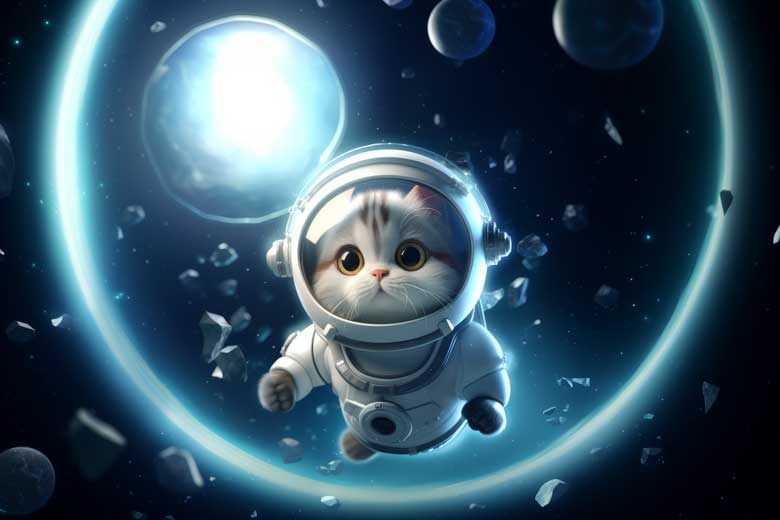
Programmers are discovering Generative AI as an invaluable coding companion.
Code Generation: AI can write boilerplate code, generate functions based on descriptions, or even translate code between different programming languages. This drastically speeds up development cycles.
Debugging & Error Detection: AI can analyze code to identify potential bugs, suggest fixes, and explain complex snippets, making debugging less of a headache.
Documentation: Generating clear and comprehensive documentation for complex software projects is often a tedious task. AI can automate much of this, ensuring that codebases are well-understood.
Learning & Training: New developers can ask AI to explain concepts, provide examples, and even walk them through coding challenges, effectively acting as a personalized tutor.
Gone are the days of rigid, frustrating chatbots. Generative AI is powering the next generation of customer support.
Intelligent Chatbots: These aren’t just following scripts; they can understand context, respond naturally, and even empathize with customer queries. They can handle a vast range of inquiries, escalating only the most complex cases to human agents.
Personalized Support: By analyzing past interactions and customer data, AI can offer highly personalized solutions and recommendations, improving customer satisfaction.
24/7 Availability: AI-powered agents provide round-the-clock support, reducing wait times and improving responsiveness, regardless of time zones.
The potential for Generative AI in science and medicine is truly transformative.
Drug Discovery: AI can generate novel molecular structures and predict their properties, significantly accelerating the search for new drugs and treatments.
Material Science: Researchers can use AI to design new materials with specific desired properties, revolutionizing industries from aerospace to energy.
Hypothesis Generation: By analyzing vast amounts of research papers and data, AI can identify patterns and suggest new hypotheses for scientists to investigate, acting as a powerful research assistant.
Medical Imaging Analysis: AI can generate synthetic medical images for training purposes or assist in the interpretation of real images, helping to diagnose diseases more accurately.
Generative AI is poised to revolutionize how we learn and teach.
Personalized Learning Paths: AI can create customized learning materials, quizzes, and exercises tailored to an individual student’s pace, learning style, and knowledge gaps.
Tutoring & Explanation: Students can ask AI for explanations of complex topics, get help with homework, or receive instant feedback on their writing and problem-solving.
Content Creation for Educators: Teachers can use AI to generate lesson plans, create diverse examples, or even design interactive simulations, saving valuable time.
Perhaps one of the most visible impacts has been in the creative fields.
Concept Generation: Artists and designers can use AI to rapidly generate visual concepts, explore different styles, and iterate on ideas at lightning speed.
Asset Creation: Creating backgrounds, textures, or even character designs can be partially automated, allowing artists to focus on high-level creative direction.
New Art Forms: Generative AI is inspiring entirely new genres of digital art and music, pushing the boundaries of what’s creatively possible.
Accessibility: For those without traditional artistic skills, AI tools offer a powerful new way to express visual ideas.
It’s easy to look at the capabilities of Generative AI and feel a pang of anxiety. Will robots take all our jobs? While the landscape of work is undoubtedly shifting, the prevailing view among experts is that Generative AI is less about replacement and more about augmentation and collaboration.
Think of it as a super-powered co-pilot. For a writer, AI can handle the tedious first draft, freeing them to refine, add nuance, and infuse their unique voice. For a designer, it can generate countless variations of a logo, allowing them to focus on selecting and perfecting the best one. For a programmer, it can write routine code, letting them concentrate on architectural challenges and innovative solutions.
The skills of the future won’t just be about using these tools, but about prompt engineering (the art of giving AI effective instructions), critical evaluation (discerning good AI output from bad), and human-centric creativity (infusing AI-generated content with empathy, judgment, and unique perspectives that only humans can provide). The ability to ask the right questions, to guide and refine AI’s output, will be paramount.
Challenges and the Path Forward
Of course, with great power comes great responsibility, and Generative AI presents its own set of challenges that need careful consideration:
Bias and Fairness: AI models are trained on vast datasets, and if those datasets contain societal biases, the AI will learn and perpetuate them. Ensuring fairness and mitigating bias in AI output is a critical ongoing challenge.
Misinformation and Deepfakes: The ability to generate convincing fake images, videos, and text poses serious risks for misinformation and malicious intent. Developing robust detection methods and promoting media literacy are essential.
Copyright and Ownership: Who owns the content generated by AI? If AI learns from copyrighted works, what are the implications? These are complex legal and ethical questions that society is actively grappling with.
Environmental Impact: Training and running large AI models consume significant computational resources and energy. Developing more efficient models and sustainable AI practices is important.
Job Displacement and Reskilling: While augmentation is the current trend, certain roles may be significantly impacted. Societies need to invest in reskilling and education to help workforces adapt.
Ethical Guidelines and Regulation: As AI becomes more powerful, establishing clear ethical guidelines and, eventually, sensible regulatory frameworks will be crucial to ensure its responsible development and deployment.
Generative AI is not just another technological fad; it’s a fundamental shift in how we interact with information and create content. It marks a pivot point, similar to the advent of the internet or the mobile revolution. The increasing availability of open-source models, combined with a user-friendly interface that often requires nothing more than natural language, has democratized a capability that was once the exclusive domain of highly specialized experts.
We are all now, in a sense, creators. Whether we’re using a simple prompt to generate an image for a presentation, asking an AI to summarize a complex document, or collaborating with it to write a piece of code, Generative AI is expanding our individual and collective capabilities.
The future will not be about humans versus AI, but about humans with AI. It’s about leveraging these incredible tools to unlock new levels of creativity, productivity, and problem-solving. So, take a breath, dive in, and start prompting. The AI Renaissance is here, and you’re invited to be a part of it. What will you create next?